
A fantastic 1962 episode from the final month of the twenty-year run of the radio program Suspense
Wednesday 12/3/25
Listened to an episode of Suspense called "The Lost Ship" from late August 1962 at the very end of the show's twenty year run (come the close of September, Suspense was no more). That must have been strange when the remaining dramatic radio programs all basically went off the air at once, becoming a thing of the past--generally speaking--and television took over.
We lost much when that happened. Radio is like reading in some ways. You form pictures in your mind, you have to pay attention, think along, use your imagination. We are smarter and better off when we do such things, and the more we do them, too.
Suspense had some of the finest and scariest individual episodes in all of what I usually call classic radio. "Old Time Radio" is misleading in my view--it suggests something that's bygone, whereas, the best of Gunsmoke, say, makes for timeless art, and I often encounter radio episodes from the 1940s and 1950s that were remarkably prescient and no less relevant now than they were when they first aired. Sometimes more so.
But the problem with Suspense was that it usually was in large part about the twist ending. Twist endings are typically a faulty gambit. That doesn't mean someone should see an end coming. Rather, the issue is with the twist for the sake of twisting. This is what undermines a number of episodes of The Twilight Zone. The series' best offerings are twist-less. Like "Walking Distance," for instance.
Suspense had a big budget, unlike other chilling radio programs such as Dark Fantasy, Quiet, Please, The Hall of Fantasy, and, later, The Black Mass, which on balance were more effective in fostering those chills. And in making you think.
Thinking doesn't have to be painful--it can be thrilling, and part of the best and most rewarding times and experiences you've had.
It saddens me (and so much more) that I feel like I need to make this disclaimer, but if you say to someone, "You'll have to think," I sense that almost everyone would have a negative reaction to that. What would Descartes say? What would he say such a person was? He'd say they weren't a person. Descartes would much enjoy our current world.
Suspense pulled in the big Hollywood stars, and cast them against type. Or, if not against type exactly, put them in roles they hadn't had before, and in which you didn't expect to see (well, hear) them. Judy Garland, for instance, plays a waitress who doesn't sing and accepts an offer of a ride home, leading to a bad situation in the "Drive-In" episode from November 21, 1946 (the same day my mother was born).
Another problem with a twist ending is that whatever contains the twist--be it film, radio program, short story--becomes a work you're less likely to revisit. To partake of again. Too much depends on the twist in most instances.
We can understand, somewhat, why the people behind television and radio shows in those first few decades of each didn't get too hung up on this: They didn't expect their shows to be watched or heard again, never mind studied.
But here's what's interesting about Suspense near the end of its run: They weren't doing the celebrity thing like before. The show wasn't held in the same regard by the big names--or the recognizable names, anyway--in Hollywood. The film industry itself was changing. Stuff got very liminal come the start of the 1960s.
The studio system was going away, independent filmmaking was feeling around for a first footing. Think of it like the pre-Code era of the early 1930s. A strange time, and you didn't know what you were going to get or what might be coming next. I mean, sure, you knew some of what you'd get--an Elvis Presley picture, for instance. But some things were closing up, and others were opening.
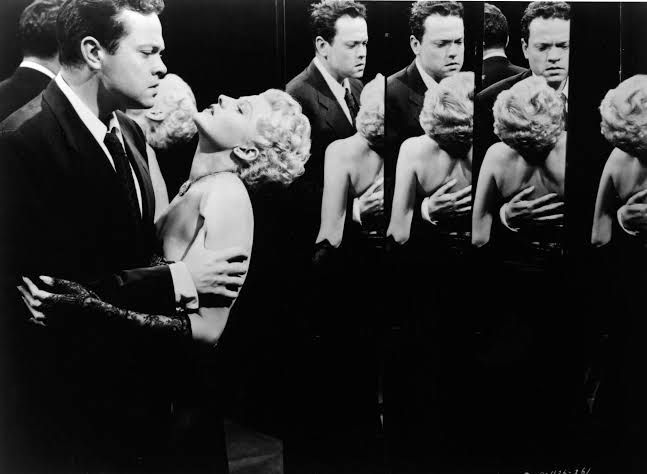
Late period Suspense is a more humble affair than Suspense had once been. I could see how someone might prefer it. Sure, I like the episodes from the salad days that feature some of my favorite artists and actors like Judy Garland, Robert Mitchum, Orson Welles, James Stewart, and Bela Lugosi, but you don't want to sleep on one like "The Lost Ship."
A man and a woman are pursued by the police after stealing $50,000 from a bank where we presume he worked. They aren't like the bang bang duo of Joseph H. Lewis's Gun Crazy (1950). She seems like a kind person--or as kind as someone inclined to rob a bank can be. He's not great, but he's not totally terrible either, I guess.
We hear the sirens of the police cars in pursuit. They've found our duo again, after the latter had thought they lost them some time back. The pair take a hard turn on a road that also isn't quite a road leading into the desert. The car eventually breaks down, and so they continue on foot, eventually coming to the home of a man who is truly kind and has elected to live away from people because, hey, who can blame him? He's living a form of the dream, in my view.
This man shares his food with the couple, and he gets to talking about this galleon that was blown/tossed ashore hundreds of years ago, and came to be buried in the desert. If you went to this nearby ridge, though, and the wind was blowing a certain direction with enough power, you could see part of the ship's mast and some of its hull.
The guy who is the older man's guest, after a fashion, decides that he's going to lay mitts on the treasure in the ship's hold. The pair even has this idea of returning the money they stole from the bank after, as if making amends and moving on were that simple.
He heads out on his own to the ship, which, as the older man warned him, is much further away than it seems, given how hard it is to get a sense for distance in the desert. There are all sorts of believable details like that in the story. But he does find the ship, and he enters its hold. Things go from there.
It's an excellent half hour of dramatic radio. Apart from the all-time Suspense heavies that I've touched on in these pages--shows that are so much better than standard Suspense fare that you're almost incredulous that they're part of the same endeavor--this is one of the most enjoyable installments of the program. Well-paced, well-plotted, well done.



Comments