
Boar's Head Inn, Fitzgerald's Notebooks, Marvelettes + Crystals, John Clare's "Autumn," horror beer, Frank/Wolf, Merry Olde, Dylan/Isle of Wight, later-ness, Perry Mason, Pogues + Oasis, M*A*S*H
Wednesday 7/15/26
Ah, but for a draught of vintage--by which I mean, unsweetened cranberry juice for me--with John Falstaff at the Boar's Head Inn and the trading of japes with kernels of truth.
F. Scott Fitzgerald had a section in his Notebooks titled, "Feelings & Emotions (without girls)," in which he could make it no further than the fifth entry before they started to become about...well, what do you think?
Adam West starred in a Perry Mason episode about a stolen first edition of Laurence Sterne’s Tristram Shandy, which is ahistorical given that the work was published in installments.
Reading recommendation: John Clare's "Autumn." "Wait!" you are likely saying, "Clare had many poems thus titled." Well, maybe you're not saying that, true as it is. The one I'm talking about treats the colors of autumn as if melded into a heat-based, autumnal analogue of summer, in which the vermilion-infused imagery bubbles over. "Hill-tops like hot iron glitter bright in the sun,/And the rivers we're eying burn to gold as they run;/ Burning hot is the ground, liquid gold is the air."
I love the Marvelettes' 1961 debut album Please Mr. Postman and its cover. Look at that mailbox! There are no love letters there! You have the spiderweb (and the spider), and, for some strange reason (given that love letters are so fervently desired), a padlock, which here doubles as epistolary chastity belt (now removed). It's as if Samuel Richardson's Clarissa had been reincarnated as the cover of a girl group album.
[How does he know all this stuff?]
So much that happens in life--the why and wherefore--can be attributed to what is detailed by a line in the Crystals' "Then He Kissed Me": "I didn't know just what to do/So I whispered 'I love you.'" Not necessarily a good thing. But you'd need to think about it.
I can help that along some: We do most, if not quite all, of the things we do because of what we call "other things" in this page rather than that which most pertains to the thing itself. We tell someone something because it's easier, not because it's true. Easier for us. Harder in the long run--which may or may not be far off--for them.
We pair up because we don't want to be alone. It's rare that we do so because we love someone so much. Who wants to be alone? Love is rare. The giving of love is rare. It requires selflessness and an altruism sourced from both heart and soul. It requires courage and vulnerability. Love seeks to heal and help and foster. It doesn't wait around for opportunities to do so. It actively goes out, finds them, answers the call that needn't be made because love was going to arrive on the scene. As Bonita's father says in "Dead Thomas," do you follow me?
Here we have someone unsure of how to proceed, so they say something they may or may not mean. Do you see what that "So" is doing? That "so" is everything in what's tantamount to a story. Focus on the "so." One word, two letters, and it's doing a ton of work. The story is in that "so." The stories of our lives are often stories of "so."
In 1980s films--especially horror films--when you work in someone's yard or house, the people who hired you give you beer instead of water. You can also just ask for beer (however rudely you please if that's your deal) and they'll give it to you. Often the cans are tossed to you, because it's understood you're that kind of guy.
The first scene of Frankenstein Meets the Wolf Man (1943) is one of the best, if not the best, in horror history. One of those scenes in which all the elements of cinema coalesce perfectly. The care that went into it is obvious. This was the film that had a lot to do with the shift to people referring to Frankenstein's monster as Frankenstein itself.
Bob Dylan with the Band at the Isle of Wight in 1969. That's some beautiful music. It's as if the Basement Tapes weren't cut at informal home studio sessions in upstate New York but rather live in concert on a foggy isle with Dylan's Nashville Skyline voice having arrived early. "Wild Mountain Thyme" is a treasure in plain view that isn't picked up and beheld, so to speak, as often as befits it.
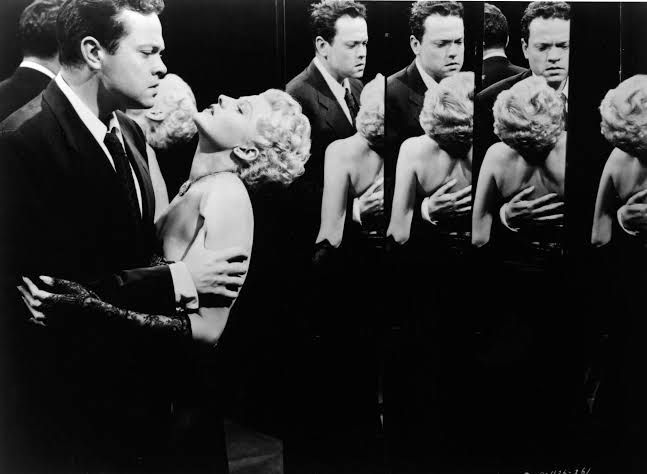
Ray Davies, Orson Welles, M.R. James--mourners for what they perceived as a lost, or being lost, England. The Kinks Are the Village Green Preservation Society, Chimes at Midnight, "A Neighbour's Landmark." But it was more than a retrenchment of Merry Olde England or Victorian England that these works (which are themselves timeless) lament. A loss of honor, whimsy, curiosity, the poetry of the esoteric in life. Quirks of wonder, which have been almost wholly cemented over in our monodic times.
Touching episode of M*A*S*H with Charles befriending the soldier with the stuttering problem and giving him his personal copy of Moby-Dick. Anything that makes you think about the things that can go on to make a difference in someone's life are good things, whether out in the world or anywhere else. Sometimes it's sharing something--an experience, a poem, a song; other times it's checking in or proffering some wisdom, an encouraging word. Small often isn't small when it's meaningful.
A great way to find top-drawer films--follow the redoubtable character actor. Elisha Cook, Dwight Frye, Burt Mustin, Royal Dano, Claude Akins, Edgar Buchanan. If you dip into their filmographies and watch nearly anything in it, it's apt to be good. I've been doing this lately with Dabbs Greer, one of those faces you see again and again without perhaps putting a name to. He's in some fine horror films: The Vampire, It! The Terror from Beyond Space, and the classic Invasion of the Body Snatchers. Dano and Cook team up in Messiah of Evil.
Chances are high that you're at a great gig when the band does the same number twice. For instance: Oasis at Wetlands in NYC 10/29/94 when they both started and encored with "Rock 'n' Roll Star" and the Pogues at Glasgow Barrowlands on 12/17/87 when they performed "Fairytale of New York" for the first time and then encored with it as well.
"It...is...later...than...you...think." That was the tag line for the radio program Lights Out. The show itself could be damn chilling, but that six-word tag was/is like some reminder for your existential dread to start up again in the off-chance it had stopped. Each time I hear an episode of the show I think, "Better get started earlier tomorrow" or some such. The power of the concept of what we'll call later-ness.



Comments