
I desiderate: fiction, books, and pieces, Beatles sessions, TV horrors, rare radio, the Grateful Dead and the best music I have ever heard
Updated: Mar 15
Wednesday 3/4/26
I like problem solving in writing. These things can be pleasingly disproportionate if you're working with something that's already matchless. That is, you take a sentence, for example, and you turn it into two, which allows you to drop a "because" so that you can use it later on in the second sentence, where you couldn't have before as you don't want it appearing twice in a sentence.
Or, one word becomes another, and that new word plays off of a different version of that word and provides structural reinforcing to a theme of the work. The changes are "small" in that we're talking a few key strokes, but the results aren't.
That's what I mean by disproportionate. This only happens, though, if you're working with a special thing to begin with. Otherwise, it's more like clean-up, rather than these big, impactful, ground-altering detonations.
I've been working on "Still Good." I can't get over how good it is itself. This should be the work of the times. A work everyone knows right now. Instead, I'll finish it and it'll remain here with me. There's more in a sentence of this story than in the entirety of the careers added together of the chosen ones of the publishing system of incestuous evil.
I didn't get this big piece on winter horror films done in time for, well, winter. Screwed that up. To a degree.
I don't write anything as a piece, just as a piece; everything I write now, even when it runs as a stand-alone work in a publication, has to be for one of my books. I don't mean in the "Collected Writings"/here it all is sense, either. I mean organically part of an organic, self-contained book.
So there's that. And this work can run next year. I'm not absolving myself for failing to get it done for this year, though. I'll try and finish it this week.
I do need to get myself in gear, though, and write a long piece on spring horror films and maybe some works pertaining to Easter horror films as well. The former will likely conclude with Hitchcock's The Birds. I'd like to write on the 1934 Mexican horror film, El fantasma del convento, which could work with Easter. These are all for my horror film book. I know I want these movies represented in it.
Plan for this week is to also write individual pieces on Tarantula (1955), The Plague of the Zombies (1966), The Devil Rides Out (1968), The Boarded Window (1973), Village of the Damned (1960), and The Skeleton Dance (1929). Again, all for the horror film book, but also individual publication. That'll add up to quite a few words.
The Louis Armstrong op-ed I wrote will have to wait until early May to run, if it runs at all. I'll need to change what I have regarding dates and what not, for that to be the case, but I was aware of this possibility when I wrote the piece.
H.P. Lovecraft's prose can have this cement truck type of quality. You're on the ground and it just keeps pouring the cement on top of you. He isn't going to give you any dialogue. Just the prose version of wet cement. Pour, pour, pour. People who say they like Lovecraft like the idea of Lovecraft much more than they like reading Lovecraft.
Yesterday morning I downloaded copies of Blue Remembered Hills (1979) and Red Shift (1978) from the oft-excellent long-running series, Play for Today, with an eye to writing about both or either in my book on horror art (TV, music, painting, writing, radio, film) that's wholly distinct from the book on horror films.
I need to write on The Vampire (1957) and The Werewolf (1956) for the horror film book. I'm linking them together as what I call humanist horror.
These are excellent films--among the best horror films of that decade, and the 1950s was strong for horror--and hardly anyone is aware of them. Both take a much-different-than-expected approach to the genre and stir up pathos. They contain large amounts of kindness.
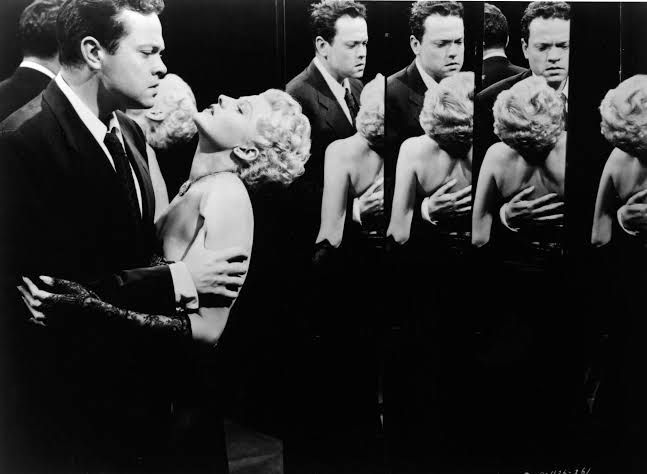
It would also be useful to write something on Hilton Edwards' Return to Glennascaul (1951) with Orson Welles in the next week or so.
Downloaded remastered versions of Bob Dylan's 1965 Hollywood Bowl show and the Who's performance at Tanglewood in 1970. Also, the 1979 ITV adaptation of M.R. James's Casting the Runes, all eight episodes of The Owl Service from 1969, Rankin-Bass's The First Easter Rabbit, and high-definition versions of Touch of Evil, Gimme Shelter, Universals assorted Mummy films from the 1940s, Hitchcock's The Lady Vanishes, War and Peace, The Narrow Margin, the fine Robert Mitchum psychological, noir-ish Western, Blood on the Moon; as well as the 13th Floor Elevators' Live Evolution Lost, a Jerry Lee Lewis show from 1966, a Lou Reed soundboard from 1989, a collection of Dennis Wilson rarities, a remastered complete version of the seven-volume Rolling Stones Unsurpassed Masters set, a bootlegged Beatles presentation (unlikely thing for someone to record, but there it is), the Big Brother and the Holding Company live album from Detroit in 1968 that came out last year, and an updated fourth volume of a fan-curated project to have all of the Beatles' unreleased studio sessions in a single place. The latest Anthology last year meant that that new material would be getting properly slotted. Volume 4 focuses mostly on the A Hard Day's Night sessions. I'm thinking of having something on The Owl Service and that 1979 TV version of Casting the Runes in my book on horror-related art. There's lot of television fare in there, whereas there's none in the horror film book. There's no one else who could write the former book, because you'd need to be an expert in all of these different areas; as for the latter, the intention is to have it be both the definitive book on horror films, and more than a book on horror films.
I mentioned downloads the other day as being like a single stair, as something that contributes to the overall objective. What was I talking about? These are all things for me to study. I'm also trying to get digital copies of everything I have physical copies of. Then there's the life I wish to have if I ever get back to Rockport. I desiderate watching and listening to these things there. The thought helps keep me going. I just want my house back, to do my work, know my work is getting to the world, and read, listen, watch, be immersed in art, and walk by the sea and out in the forest. Art, art, art, art. art. It's all that matters to me and all that is enough for me. And nature. But there's art in nature.
Lots of radio program listening/studying in the last couple of days. "The Leading Man Talent Search" from 4/26/53 and "My Love Is a Ghost" from 11/16/52 episodes of The Chase, a little known program that ran from 1952-53, with each episode featuring, that's right, a chase. Rarely will you see this show mentioned even by radio drama history enthusiasts. "My Love Is a Ghost" is pretty good, but it's nothing you haven't heard variants of before if you listen to these kinds of things. There's a hint of that kind of haunting we see in Oliver Onions' "The Beckoning Fair One."
Listened to the Box 13 episode "The Haunted Artist" (2/6/48). This show starred Alan Ladd and it's a treat to hear him. Always good to have more Alan Ladd. Also "Death Is My Caller" (10/21/47) from The Mysterious Traveler, a usually dependable series co-written by Robert Arthur, the man who'd later give us the Three Investigators mystery series. What else? The "Wind Song" episode of Obsession, another not-very-well-known program from Chicago that lasted for seventeen months in the early 1950s. And, lastly, the late-in-the-run Suspense episode, "A Statement of Fact" from 1960. These final episodes of Suspense appeal to me. They take a different approach than what had been the norm in the series' salad days. They're less reliant on the twist ending and that's a good thing. They're humbler, I suppose you could say. They're not trying to dazzle. They earn their success as radio productions rather than shout stuff out to you.
Downloaded the Betty Cantor board tape of the Grateful Dead's 2/18/71 performance at the Capitol Theatre. Has a rockier sound than the other sources. There's a Charlie Miller remastered version from a different source tape. That one cuts off Bob Weir's "Are we ready?" before "Bertha" at the start of the show. You need both. (The version of the show on the 50th anniversary edition of American Beauty is suggestive of this second source and includes the Weir intro.)
Also got the 1972 Rotterdam show, which isn't complete on the Europe 1972 box set, and the 2/26/73 Lincoln, Nebraska performance. I love the idea of the Dead going around to middle American venues in the dead of winter. It's very Duke Ellington/Fargo 1940.
I sent my nephew, via my sister, a clip of the Grateful Dead playing "Big River" on 9/27/72 at the Stanley Theatre in Jersey City and told her to tell him to check out the drumming, on account that he's has been playing percussion in his school band.
This is one of those recordings that causes me to think it's the best music I've ever heard as I'm hearing it. The music of the Grateful Dead produces this effect in me more often, by far, than any other music does. The music from that show--the whole sweep of it--could truly be the best music that's ever been made.


Comments