
Perception hack
Saturday 1/3/26
People say a lot of things aimed to get others--and themselves--to think how well they are doing. How content and fulfilled they are. Both out in their lives and on social media. Now, too, with social media, people post a lot of photos meant to achieve the same ends: To elbow reality out of the way and grant the stage to appearance. If appearance is all that anyone else gets, then appearance becomes...voila...what is presumed as reality.
I think of much of this like makeup. A way to present something in what's perceived to be a better light (though I'm not an admirer of actual makeup; I'd rather see someone as they are--that, to me, is where real physical beauty resides; in the person who has just gotten up and is taking out the garbage, fighting back a yawn; a person can look as beautiful as a person can look in such a moment as themselves).
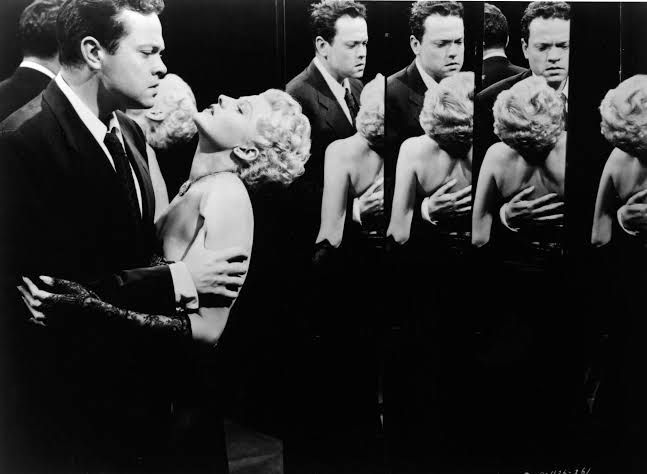
I see it in how the photos themselves are captured. With this intention of for after. Of how the captured moment will present to others. There's that director's eye at work. Or the auteur's eye. The documentation isn't by chance; it's with an aim in mind. "Oooh! This will be good to suggest..."
Then I think there are all these other people who see these photos, who hear the testimonies and homilies, who feel worse about themselves and what they don't have. Perhaps they feel shame or embarrassed and on this grand scale, too, like they've done life entirely wrong or for the comparative paucity of that life as they're seeing it in these moments of almost inevitable comparison. They are alone and/or they don't have kids, there's no warm bosom of family and friends for them. No vacations, no big nights out. They think it's too late. They're too old now. If only they could go back...way back...and make different choices...
But much of our lives now, in my view, is comprised of decor and little else. The presentation. The set-up. You could call it appearances, but there's more to it than that; carefully managed appearances, let us say, and that's a key distinction.
I think most people ache on the inside. Ache profoundly. The person in what is deemed the favorable situation in the example above, may well look at that other person--the one who thinks they screwed up their life, wasted their life--and have similar feelings about them. But the life of the first person doesn't present as well in this fashion--which is the normal fashion--of what we're talking about here, with their photos of themselves on their own or another tale of disappointment after finally having met someone after trying for so long, with that...whatever it was...lasting ten days and ending with a ghosting.
We care an awful lot about what I'll call the leverage perception. The person who cares less about someone they just met or someone they used to know is thought to have more power over that other person, and/or to have "won." And it's not a matter of whether they really care less; it's how it looks. Or can be seen to look.
I'd venture that someone who actually cared less can appear to care more. Let's say they reached out with some kind words, which were simply kind words, or hit that like button on some social media post. This individual wouldn't be hung up on the perception. If that other person wished to think they were enamored of them, or the one who thought about them when they themselves thought viewed it as a plus not to suggest they thought about that other person, then so be it.
Think what you want, would be the attitude; the truth is the truth and sometimes the truth is just separate, off over there, if you will, being the truth. You pick a side of the fence to be on. Sometimes there is no fence. But there you are either way, in truth's garden.
But how many of us are comfortable answering to the truth? With this example, the person who receives the note or sees that like can think, "They think about me and I don't think about them," and feel good about that, because this is the kind of thing that does make us feel good, unfortunately. That's isn't new.
When you grow up, and you become wiser, you learn what I've just written. You realize there's what a person thinks and there's the truth, and they often don't have much overlap. You pick a side, in effect. You act--and by act, I mean act as one on the stage does--like you're this way and think this way in following (or don't think), or you ride with reality, and who cares what the person who isn't making the point of trying to align themselves with reality--to use a popular word today--concludes.
We usually don't even ask the questions. We don't allow for the possibility inherent in what I've just suggested. That someone could be...this other thing. Here's how knowing works: The first thing you think won't be correct. Nor will the second. Nor the third, and in following. The correct thing will be the thing suggested by one of those previous things, that leads to this other thing, that leads to another, that sets you down this path to something else, and finally you get to what's correct.
The more you do this, the faster you find that thing, such that it feels like it was the very first thing, because all of those other things take place within a thought that itself houses who knows how many other thoughts going off on their assorted courses.
Most people, though, will stick with their first thought, especially if it's a thought they prefer. Or, alternatively, they'll get stuck on that thought because they're in pain, they're feeling lonely, and that's a hard time to buck up and rally and "shake it off" and manage to see any light whatsoever in a sky that keeps getting darker and darker and darker.
I'd simply suggest that's worth keeping in mind. Call it a perception hack, to again tap into the lexicon of these times. People in outwardly very different situations tend to have a lot more in common internally than expressed words and photos suggest.
People's words are closer in nature to carefully crafted PR statements than they anything that comes from the heart. Think of press releases. How insincere they are. What they attempt to do. The famous person does something wrong, the PR team drafts a letter for them in the first person. It's tepid, vanilla. It's corporate. That's us as "individuals" far more often than not these days.
As a general rule, what things seem to be, and what things are, is very different. More so than ever in our age, when thinking is rare, when we've become collectively worse at thinking, and we're so performative and have all these conditioned, automatic responses to almost everything. These built-in "beliefs" that this means that and that means this.
Again, look at publishing. Does anyone who actually looks at and thinks about--thinks at all--something like those works we've seen in these pages by Joshua Cohen, Tommy Orange, George Saunders, or from the pages of Granta, think they're not godawful? But what happens instead? No one looks. No one thinks. People just know to say that something is amazing, the best, vaunted, because it was in The New Yorker or its author won a Pulitzer Prize.
The truth is that there's next to nothing that anyone would rather read less. The people who do "want" to read it only want to insofar as that works enables what they wish to think about themselves. That they are "elite," intelligent, cultured, a part of an exceedingly select group whose members by dint of inclusion in that group are better than everyone who isn't in that group. That's a sad, pathetic person.
They're not using the reading for reading. It's like using a comb for a plate. You go over someone's house and they set the table with combs and serve the pasta meal on a comb. You wouldn't say they were using a comb, because that has a totally different meaning.
That's what most people in publishing are doing--they're serving the pasta on a comb. The same with people at FSG who put out the books they put out or the people who "read" this fiction in The New Yorker or The Atlantic or Granta or The Paris Review.
This is what I mean by the combination of being conditioned, the automatic response, not thinking at all, and not even looking.
We just...say what we think we're supposed to say and honor what we think something is supposed to mean, what it "officially" means. But anyone who actually looks at that writing knows it isn't any better than what their fourth grader produced today in class and brought home in their book bag. In truth, it's worse.
You don't need to be a genius to know that. You just have to actually look at it and say what you know, what anyone would know who actually looked at it. But we usually don't. Think of the millions of pretend writers--they're all over writing subreddits--venerating these venues and publishing houses and agents. "Oh, if only I could be one of them," they all seem to say/pray.
Yet none of them care enough about writing and reading...to actually sit down and look at what they're automatically elevating to the heavens of worthiness. Think about that. It's insane.
But you will rarely see any of these people so much as suggest that something that is plainly awful isn't, maybe, you know, super duper. And if one of them does? The rest of them--none of whom have ever so much looked at what they're automatically venerating--shout that person down by saying, "I guess your (sic) in the New Yorker all the time."
Millions of such people, and none of them are even a tiny bit sincere about this thing they claim to care about so much. The truth is, they don't care about it at all. They just have this fantasy of sitting at a table, with a line of people waiting for them to sign a copy of their book.
That's how they're thinking. Something along those lines. They're not thinking about what their work is and what their work means to the people in that line. Rather that those people are there for them. Which is really no different if you're Laura Van Den Berg or Junot Diaz.
Isn't that just...pathetic? And pointless, ultimately? Selfish. Stupid. Childish. Indicative of a person's relative...nothingness. But again: The comb as the plate. Not a plate as a plate--and the comb tends to appearance. People are so entirely about appearance that they try and use the comb for everything, and as a stand-in for anything.
You can extrapolate this. Extend this example/model to everything. For example, someone who is more interesting has more followers, when the opposite is usually what's true.
But we don't question the model belief, the showroom belief. Never mind that if we were to take that couch home from the showroom and try to sit on it in our living rooms it would break into a dozen pieces and our ass would be there on the floor. We also don't care enough. We care about ourselves. How we are seen. Not who and how we are.
As we become shallower, we have less ability to extend deeper down--there's less room--and launch ourselves into something else. Including a legitimate interest in something else.
What happens then? We parrot. Because we aren't even looking. We are saying what we think is supposed to be said. We challenge little. When we do challenge, it's for attention. People will often use contrarianism in this manner. But they rarely even honestly feel the way they're claiming to. It's impossible to underestimate people's need to feel special without actually being so. For something. For "their thing." The thing that is deemed by them as integral to their identity. Their badge. Their identifier.
Hence, all of the millions of non-writers who say they are writers. They couldn't do this by saying they were a basketball player. You'd have to play. Writing has the lowest threshold to clear. Open a Word document, write five horrible sentences, boom, people call themselves a writer. They take to Reddit, link up with millions of others doing the same thing--or go to an MFA program, or hobnob in Brooklyn with some douchebags--and they are validated by others doing the exact same thing, for the exact same reason, who aren't actually looking at what they're being shown and instead lying about how that person is on the right track, or it was so great. They're just automatically saying things. In time, this is all there is. People like this.
That's the publishing industry now. There isn't a cavalry of great writers who can ride in to save the day because those writers don't exist. Anyone in the system, validated by the system, is like the people of the system, has been in the system, was in essence reared by the system.
The system extends to pre-publishing industry. To being born into money. To never being told "No" or "You aren't good at this." Handouts. Unearned opportunities. Cronyism. Nepotism. Off to Yale for undergrad. Off to Iowa for MFA. Englihs department. AWP. Douchebag parties/gatherings. Story accepted sight unseen in Tin House. Agent. System incest. Reviews written basically on the take by those who know what they're supposed to say because it has been decreed to officially make this happen right now for, say, Percival Everett.
That's all planned in advance. It's all meticulously rigged. That isn't happening because so much as a single person read a book and thought, "Genius, brilliant, amazing, the world needs this." That has nothing to do with it. It's not the reality. The reality, in a sense, doesn't matter, because people who don't look, who don't care, come along and say their remarks.
You get prescriptive idolatry. Presumption-sans-looking becomes gospel. No one actually sees those gospels. They're just...out there. It's cultural heresay. With an official stamp. What does the stamping? Our lack of looking. Our lack of effort. Our lack of thinking. In following from what was put forward--for other reasons than what that thing actually is--by someone else's design.
People tend to gravitate towards the same places inwardly. They have the same kinds of regrets, fears, things they're ashamed of and wouldn't want to share with someone else because--and this is key--they wouldn't want someone else knowing that that's the truth. This includes the people who are closest to them and/or presented as being the closest to them.
It isn't worth thinking you know what the deal is with someone else--the real deal, I mean--any more than it is thinking that you know what they're really thinking about you. Because you don't know. And what you did know wouldn't be what you first thought anyway. It'd be this thing after this thing that led you to this thing that moved you to this other thing that had nothing whatsoever to do with the thing, as it turns out, from whence you started, to this other things, and so on.
So just wake up each day, and try to be better than you were the day before. Try to find more meaning. Try to be more than you were so you can offer more to others, whether you have other people in your life or if you don't but want to or have some but that's only going how it goes and not as it could or should.
It's also worth remembering that they game isn't over until the final whistle. A lot can happen at any point in the game. Despite how it may feel, how it may look, or how the crowd, the viewers, think it necessarily will finish. We all know who knows how many examples of a game that seemed set in proverbial stone one way became something else instead. That doesn't mean it will. It just means what it means.



Comments