
The best time to go to bed for heart health
- Jul 9
- 5 min read
Updated: Jul 10
Thursday 7/9/26
The only kind of internet headline I'm vulnerable to--that is, one that will almost automatically get me to click on the article--is that pertaining to health; specifically, what might be my health, especially if the topic is about something you can control.
I know the answer now and have for a long time, but if I didn't and I saw a headline, "Best teas for heart health," that will get me to go to the article. Almost everything is hack-y, indistinguishable lowest common denominator idiocy. These places are trying to dupe you into that click. That's the end of it. There's no reading to be had on the other side of that click once you get there. Nothing you need.
It's all about the trap. Can we snare you? Then you go off on on your own once more, jumping into different traps, and it's a case of can we snare you again? Catch and release, catch and release. Hopefully you forget--this is the business model, as such, of these venues, whether that's The Atlantic or EssentiallySports--that you clicked before and regretted it because there was nothing there. There's very little real writing in the world and next to nothing worth reading. Which is part of the problem with the whole nobody reads thing and no one can comprehend what they do read because they read so little and have no reading skills. We won't be getting into that here. But with these health articles, you aren't getting good writing, of course, but you are getting data sourced from scientific studies. That's not nothing, at least.
This morning I saw a headline for one of these study-sharing articles that floated the question of who is most at risk for heart disease based on when they go to bed and when they get up. This is the type of thing I'm almost certain to check out. You can control when you go to bed and when arise. I click on the link thinking, "Please don't say early risers are screwed," because that's how I've done it for a long time and how I'd like to keep doing it, and instead it's the opposite--people who stay up late--the articles calls them "night owls" several times--are much more at risk.
But you know what? It isn't really true. That's something I've learned about these articles--you really do need to keep going until the end. Because it's not going to bed late itself that's the issue. It turns out that when you sleep doesn't really matter. Life-wise it matters. People who get up later are likelier, in my experience, to be stupider, lazier, fatter, and often a worse person.
I generally detest the kind of person why says, "Good morning" like at 11 AM; conveys a lot about that person; they're an idler, a loafer, a person without purpose, a flaneur, an unserious person. They likely got up after nine, which is often disgraceful if you're not a high school kid and it's summer, though there can be exceptions. This is very common with pretend writers who got MFAs, suck at writing, and live in Brooklyn off of trust funds. What? You think they're getting up at three or four or five in the morning and working super hard on that prose of theirs? That's hilarious.
People who get up earlier and like winter--bringing that in again--are likelier to be smarter, better educated (which has nothing to do with getting a piece of paper from some institution), wiser, more caring, have better perspective, and are far likelier to be worth knowing. More so if they both like and played baseball and/or hockey (baseball being the thinking person's sport, and hockey have a character-building quality for the more intelligent people who play it), and read. More so if they go out in the rain and welcome it and don't believe in umbrellas. Now, if they also run stairs...But that's too much to ask, and we're digressing a bit.
Do you know why these "night owls" are likelier to have heart issues and have heart attacks and strokes? Because they're likelier to smoke, drink, not exercise, have poor sleep, poor diet, and unmanaged blood sugar. That was in the article. So the time has nothing to do with it. If you're staying up late, you're unlikely to not be doing bad things to yourself while you're staying up (maybe you're reading Sherlock Holmes stories or studying versions of the Grateful Dead's "Dark Star"--things that have had me up late--but probably not, right?). You sit around a lot so you sit around to the early hours, too. You eat, drink, and smoke while doing that. People who sit late into the night are apt to sit throughout their days. Sitting may be what they do in life, in effect.
There was a time in my life when I stayed up late. I was drinking, smoking. Had poor diet. Really poor. You know what I ate? Pizza, lots of processed meats. So much processed meats. Salami, pepperoni. Actually, didn't exercise much. (Can you imagine? It's true, though. I wouldn't exercise at all, to be honest with you. For most of my twenties and thirties.) I was living that side of the article. This is going back, though. Because even when I was drinking after Molly left--which I continued doing for a little more than four years--I was walking 3000 miles a year from 2012-2016. Then when I stopped drinking in 2016 is when the stair running began. Which is also when I started getting up earlier in a healthy manner. I had been going to bed earlier I'd say, but that was alcohol-related. I'd use it to try and go to sleep. End the day earlier. Then maybe I'd awake at three from that, and walk twenty miles starting at that time. This was exercise, but not a good exercise model. It was also like clearing out the booze in order to do it again.
So, if you're out there, and you think you can't make changes, look at the changes I made. You can always point and be like, "Well, he did it." I had the smoking (I quit smoking the day my father died), the drinking for a long time, the terrible diet, and the no exercising. Me! Can you believe that? Stair guy?! That was stair guy?!? He had an unlivable life, and he did it, so he could make that art.
This made me think again about the Melatonin study I've mentioned a couple times of late. Because these studies present their information as indicative of this one thing--as in, resulting from this one thing--but often it's about these different things. This particular study wasn't really saying, "If you get up earlier you're less likely to have heart issues," but rather, "People who stay up late are often the kind of person who takes terrible care of themselves," which is different.
The real answer here is, "any time is the best time to go to bed for your heart health so long as you don't smoke, don't drink, don't have poor dietary habits, and you exercise and get enough sleep."
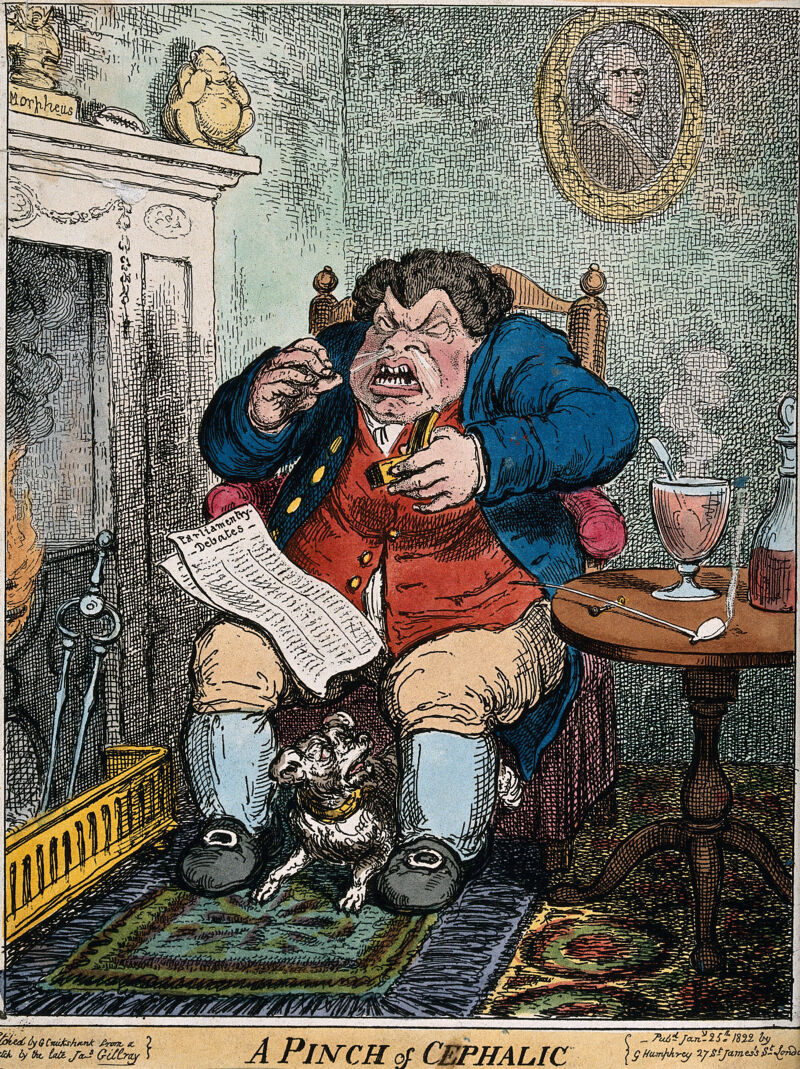
I don't normally comment on the images I use at the bottoms of these entries, because this is a book, not a picture book, and one day it all goes between covers. But I can also speak about the images such that it wouldn't matter if they were included and the words about the image in lieu of the image are sufficient, effective, evocative. Note the look of alarm on the dog's face in this nineteenth century illustration. You can read a fair amount into the images I select. In this one, there's a bust of Morpheus on the shelf above the fire, Morpheus being the Greek god of sleep. We have the booze, the tobacco. That guy is staying up.


Comments