
Three stories done, work on soccer story, Joseph Losey's The Big Night and connection, Johannes Okeghem
Wednesday 3/25/26
Yesterday I signed off on two short stories, "The Sighs Have It" and "Oh No Not That" as complete. Both very short word count-wise. I described them as "starters" to a few people I sent them to, but they're good. And starters in the restaurant sense in terms of what's coming.
One of those stories that's coming, or has come, is "Open or Closed," done as of this morning unless I go back and alter it, which I don't envision doing. Also not long word count-wise, but it contains much. Pregnant language, clarity, mystery, room to think as one is made to feel. You don't need to spell everything out, and some narrators can't, which is part of how their story is gotten across and has part of the power that it does. I'll consider this one, as I said, for Longer on the Inside: Very Short Fictions of Infinitely Human Lives.
Rolled up the sleeves and really muscled into "Boom the Ball" yesterday. Quite a few hours' of work on that story. Starting to get there.
"Boom the Ball" is told by someone who walks past a park every day that has two baseball diamonds. They begin by mentioning what they thought, at the time, was the worst day of their life, and how they'd ended up at that part on it. There's a tall fence out in the distance where the outfields, as such, of the two baseball fields come together, and this person had their head pressed against this fence, leaning into it with their full weight, and they were screaming.
We don't know what happened that day, or what this person learned. What news they got. How their life changed. For all the days since, that person walks past this part, but only when they go out on their walk, and not when they come back, save for this day that proves an exception. The park has a couple water fountains and they were thirty, so they took the same route in returning.
They talk about how even now they can look out across this sweeping field and see themselves out there against that fence. Anyway, they get their drink at the nearest water fountain to hand, and then walk down the other end of the park where three kids--two girls and a boy--are playing soccer along the third base line of this second diamond, using a section of the fence that's closest to the street as a goal. One of the girls, who is a much better player than the other girl and the boy, is barefoot, which doesn't impede her. In the distance, like in the background of a painting, there's another game going on, which seems to include the parents of at least one of these children, and probably two, because the boy and the shoeless girl seem like siblings.
The narrator sits down on one of the concrete steps that serve as the stands, takes a load off, you could say, and starts watching this game. And it becomes this thing that is not just this thing. A game that's not just a game. And the story itself becomes a story about...well, I'd call it the meaning of it all. Of our lives. Of us being here.
Eventually the three kids stop what they're doing and become part of this other game that had been going on behind them, which more and more people join as the narrator watches.
When I was in college, and working on my writing, I was mostly writing about music. It's what I did. It's where my focus was. It had nothing to do with professors or college. I realized very early on that the professors knew nothing and couldn't write. They simply had the jobs they had, and the title meant nothing, and rarely anything good. It was on me to do what I needed to do. It had to come from me.
They couldn't help me with anything, nor was that how most of them were wired. They were usually miserable people whose ignorance wasn't seen for how obvious it ought to have been by others because those other people didn't know either. They were arrogant, insecure, socially inept, bereft of imagination and a capacity for wonder. That wasn't where you wanted to be if you wanted to write.
One thing I explored was this idea that the manner in which you wrote should stylistically parallel what you were writing about. This wasn't a sound idea, but it helped advance to not just sound ideas, but brilliant conceptions that I alone could have and then bring off.
The barefoot girl of the story booms the ball from time to time. She's a far superior player to everyone, but she doesn't act like it. When she joins the game that features adults, she ends up setting up mom for a bunch of easy tap-in goals, and we get the sense that she does so so that mom, who used to play, can feel good about herself. There's a wisdom in this ten or eleven-year-old girl's game that is beyond this game.
We are apt to have our suppositions about what befell the narrator. Did they lose a child? Again, we don't know; but what we do know is that they're choosing to be present in what they're seeing here, and we have the feeling that that's not something they do a lot of, or have been able to do a lot of. That takes the precedent. It's why we don't need to be told, "Oh, yeah, there was this horrible thing that happened to me and this is what it was..." It may be a sort of foundation, but it's also not the point.
The girl only makes these thundering, amazing kicks from time to time. She chooses her spots. She's so good that at other times she'll let opposing players make their runs so that everyone can kind of have this nice day out. Because if she want to, she could dispossess them of the ball with ease, but this is, again, a certain kind of game. Games.
These booming kicks feel like special moments, and the narrator starts to find themselves wanting to see the next one happen. Eventually, we get this sentence that parallels the flight of the ball as it goes over some heads and between some bodies on its boomed journey, if you will, and the sentence is meant to go along with it, and does it ever.
Right now, it stands at 148 words long, and in that sentence is the meaning of it all. It's the answer sentence. The flight and journey sentence. It's not a run-on sentence either, and someone would want to say, "That's not possible," but I am me and I can do what I do. It's set up by the paragraph that precedes it, and followed up by the two after it. I've let the story sit, but I'll get back to it after I write some other things and see where we are at.
For a number of weeks now there have been these beautiful loons in the water down by the Bill Russell bridge that I see when I go to Charlestown. I usually stop and watch them for a bit.
The weather remains more winter than not right now. It's thirty-three degrees as I write this at two in the morning. Looks like it will be another non-shorts day in the Bunker Hill Monument.
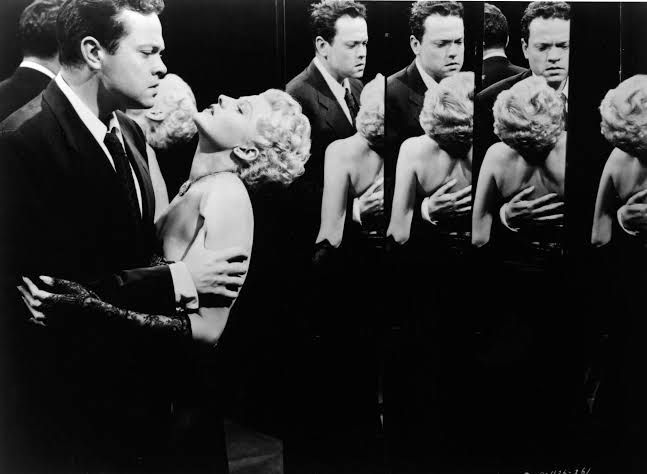
Watched The Big Night (1951), another Joseph Losey film and was much impressed by it. (And speaking of academics...) The scenes between the John Barrymore, Jr. and Joan Lorring characters are stark, real, and powerful. They have an instant connection, and while connection have always been rare, and are virtually nonexistent now--it's as if they never happen and can hardly happen in this world at any time--it occurred to me as I watched that however real a connection may be, they're often actuated in part by need.
I'm not suggesting that's their basis. But if those two people weren't what they'd come to be in their individual lives apart from each other, prior to not meeting each other, they wouldn't have the connection they do. What this in turn means is that they're going to have to be naked--metaphorically--with each other. We don't do naked. We do performance. We do cover ups. We stylize.
Connection requires some degree of strength, even if it's passing strength (which is why you can have a connection with someone that is real, and then is no more, because the strength goes, and you or they go).
The way we "live" here in 2026 makes us weaker and weaker and weaker. We cannot handle realness. We don't rise up. We are rule-able. Penned beasts of burden living empty, unchanging lives, in which we're increasingly incapable of taking any emotional risks, intuiting that we couldn't recover from the rejection, the setback, "being exposed," whatever the case may be.
No matter how bad our lives get, how increasingly directionless and purposeless, as if we're living them by accident, very few people ever have a single real moment now of, "Fuck it, I can't do this anymore, this is me." And that, or something close to that and moving towards that, is necessary for a real connection.
Losey made The Big Night and The Prowler in the same year. I'd say he was doing pretty well artistically in 1951.
Got a ticket for Saturday for Blue Heron's performance of Johannes Okeghem's Missa Cuiusvis toni at First Church in Cambridge. That should be good--Blue Heron always is, and you don't get to hear this work performed that often.



Comments