
It's so creamy: Bob Wills and Grateful Dead research, writing, Dahl/Burrage, Murder at Midnight, first jazz, acoustic Pete Townshend, Welles/Shrewsbury, Beatles and the parasocial, Stones' Aftermath
Thursday 4/2/26
Over the weekend the past weekend I was engaged in research for two nonfiction books: one on extended musical residencies that document changes in American musical history, and the other on the Grateful Dead's "Dark Star," a vehicle representing the art that means more to me than any art that isn't my own, which is saying much, given what art obviously means to me. To say it's my life isn't to say nearly enough.
Anyway, a section about the American musical residencies book focuses on the recordings that Bob Wills and his Texas Playboys made from 1946-47 that are known as the Tiffany Transcriptions. These sessions were cut live at a studio in San Francisco, with the discs going out to radio stations to be played on the air. You could think of them like the Beatles' BBC sessions, without the between-song banter and more stations involved.
A goodly amount from the Tiffany Transcriptions trove eventually gained release. There's a ten disc box set, though the individual albums aren't that long, so the total number is a bit deceiving. A packaging of this material was actually the first thing I ever wrote about for JazzTimes, in 2006.
The problem here, for me with my book, is that loads of these recordings weren't available until the Country Music Hall of Fame put them up as streaming audio on their site. And goodness there's a ton of it. But you can't download the music. I don't know if this will be up indefinitely. Probably, but I don't know that. So I've been trying to figure out a way to acquire the content of the streams permanently, which I was working on over the weekend.
I have some tricks, but none of them worked, so what I had to do was get this recorder app/add-on, and I can record the streams that way, but only by playing them all the way through. That is, I need to hit the record button, then the play button, and then the stop button when the stream--usually about ten minutes in length for a given acetate disc--is done. It's going to take a while. I'll just have to chip away at it.
On the Grateful Dead side, I was sorting through a number of 1974 tapes. That's the year of the Wall of Sound, and for all the praise the Wall received and has received from an audiophile perspective, the soundboards from that year tend to lack compared to Dead soundboards from the years up until then, ironically, owing to some of the gear. You need the audience tapes, too.
The "Dark Star" from Miami on 6/23/74 is one thing on the soundboard tape (and the official Dave's Picks release) and another on audience tape (Jerry Moore is the go-to guy/taper for a swath of the key 1974 audience recordings). I am going so deep into "Dark Star" that things like this become almost massive, rather than some throwaway matter of casual preference. And though it doesn't include a "Dark Star," I spent the better portion of a morning with soundboard and audience tapes of the Dead's 8/6/74 Roosevelt Stadium gig from Jersey City. "Dark Star" doesn't have to be always be played to be played.
NB: On 6/23/74, we have a verse-less "Dark Star" and the only performance from the Grateful Dead of Chuck Berry's "Let It Rock." On 12/5/71 at the Felt Forum, we have a verse-less "Dark Star" and the band's only performance of Stonewall Jackson's "I Washed My Hands in Muddy Water" (incidentally, I downloaded the Bear Family Stonewall Jackson featuring that number on Monday).
Pete Townshend was a masterful acoustic guitar player. His solo--and picking throughout--on the delicate "Sunrise" off of The Who Sell Out is some of the most arresting playing of its time. People don't expect that from him. His electric playing--think of the delicate arpeggios during various concert portions--was informed by his acoustic work, much as Jerry Garcia's banjo playing had a significant influence on aspects of "Dark Star" and the solos on "Goin' Down the Road Feeling Bad."
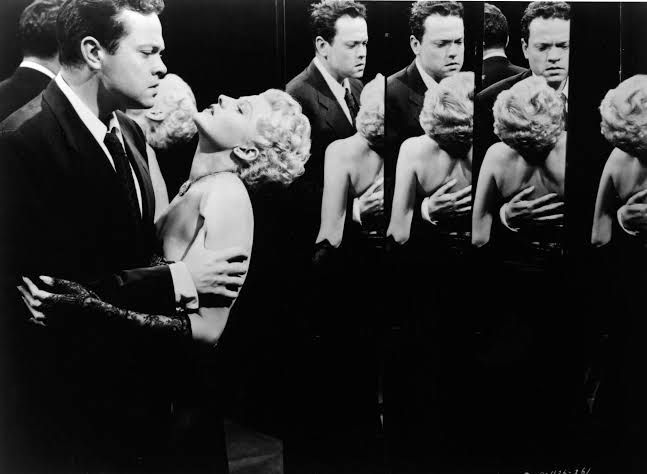
If you were on set as Orson Welles was shooting the Battle of Shrewsbury for Chimes at Midnight, you'd almost certainly have been shocked when you saw the final result in the film. A cornerstone of Welles's art was his editorial abilities, both in film and in his radio and theatrical adaptations.
The first jazz I got heavily into was bebop. I was a junior in high school and listening to a lot of Charlie Parker. After I graduated, whenever I returned home for a number of years I'd get lunch with a former guidance counselor, and we'd go into Chicago to visit the Tower Records. They had a huge jazz section. I remember wading through the Charlie Parker live releases. They had all those rare ones, or what came to be rare ones, with the dodgy fidelity. I loved and love that stuff.
Excellent work throughout yesterday--morning, afternoon, evening--on "Still Good." Every sentence should be an event in the greatest writing, which is the greatest of all art. There are so many parts in this story where the breath is taken right out of me. I'm very close to finished now. I've probably said that a bunch. But then I saw things I could make even better, and that simply may not be possible now, but I'll get back into it soon and make determinations.
Finished writing four new nonfiction pieces totaling about 3500 words, the last being done at about two in the morning on Sunday. That one was a very funny piece, in addition to the many other things it was. I had mentioned I've had more quit in me than fight of late. I'm sure someone reading through this record would just see thing after thing that takes sizable outlays of effort, to say nothing of creativity, ability constantly being brought to bear. I qualified that, though--my standards.
Which can't be measured, and I can't be measured, against anything or anyone else. I have more against me than anyone, by a million fold. I am trying to do more in my time here than anyone, by who knows how much fold. It can't be, "I got my 10,000 steps in and have been 'drafting' a new piece for the last six days, hooray me."
On Bob Dylan's The 1966 Live Recordings, you have to swap the versions of "Like a Rolling Stone" attributed to the Cardiff and Newcastle shows for each other because that's precisely how they were misattributed.
It's the time of the year where I feel perfectly comfortable listening to and watching Christmas-related things again going forward. This is a welcome because I have Christmas-related works of fiction to write for my book of Christmas stories.
Found and downloaded a pdf file of Roald Dahl's Book of Ghost Stories, an anthology he assembled, from 1983, which contains a couple of works by A.M. Burrage whose material is frustratingly hard to locate these days. I'll read three of his stories in short order. "Smee," as I've said, is a longstanding favorite, and the Beyond Midnight radio adaptation from December 27, 1968, is also good.
Murder at Midnight was a suspense radio drama with horror and supernatural elements produced in New York from April 30, 1946, through to December 20 of that year. It's little discussed by classic radio historians, but it's actually quite solid.
Thought it was time to upgrade what I had, so I downloaded all the extant episodes over the weekend, and listened to four of them in succession: "Wherever I Go," "Trigger Man," "Nightmare," "The 13th Floor." "Trigger Man" amused me. It's about this hood who is too scared to shoot his underworld foes, earning him the nickname Chicken until, let us say, he sheds the nickname, and says cool things like, "Who's chicken now?"
Work continues with "Boom the Ball." This story has had quite the journey from where it started and what it started as, and yet, when I put what it was and what it now is side by side, so to speak, in my mind, everything makes perfect sense to me and I see how "easily"--naturally--the former became the latter.
To someone else, though, it would probably prove rather confusing how it'd gone from one thing to the other and the connective strands I see would be invisible to them. The story was prompted by something I'd happened to write in these pages, and then became something very different indeed.
Strong work in my head on a new story while walking/looking for the Trader Joe's that is in the seaport on Friday.
Fielded a few editorial queries and made a handful of requested/suggested changes, then had to go back and change a document I had returned the day before because I realized there was this thing I'd gotten wrong which had eluded detection. Apologized.
I've had one of the Yardbirds' Great Shakes commercials in my head for a while. It's so creamy, rich and dreamy! For a few days it'd been various versions of the Grateful Dead's "Eyes of the World." I'll write a piece about 1960s jingles by rock bands--the Yardbirds, Who, Cream, Rolling Stones.
Some nuggets in there which actually add to what those bands were doing at the time, document where they were at, could function as an extension of something else that's "officially" celebrated (like The Who Sell Out, for example). The Great Shakes jingle was cut right when Jeff Beck was leaving, or right after he left, the band, in late October 1966.
I'll also write a piece on the Stones' Aftermath. I got heavily into this album early, around sixteen-years-old. Their departure record. I've always considered it undervalued by people, including Stones people. There aren't Stones people like there are Beatles or Grateful Dead people, though many of the former are just people who use the parasocial to try and compensate for the emptiness of their lives and use internet "communities" as a stand-in for any real connection with anyone or anything in this world, including themselves.
Being a Beatles "fan" right now, for most people, is about the parasocial, not the music. Grateful Dead people usually know more about Grateful Dead music than Beatles people know about Beatles music, but all the same, it's remarkably telling how many Grateful Dead people do so little active, engaged listening, and rather just parrot old saws. The Veneta 1972 "Dark Star" is the ultimate "Dark Star," etc.
I don't think someone who actually listens to that performance with an open mind and open ears, so to speak, is going to think that, or even think it's the ultimate "Dark Star" from that week, or even the "Dark Star" runner-up from that week! There's a listening version of critical thinking, and the truth is, very few people do this on their own, no matter how much they tell you they're into a given artist.
Immediately with Aftermath I felt like I was listening from inside of something that was its own, set apart thing, and there I was within that space, or sound-space, if you prefer. A different musical country. The UK version is the way to go. Aftermath is slept on like the Yardbirds album that become known as Roger the Engineer is slept on. The latter is up there with anything the Beatles, Dylan, Hendrix, Beach Boys cut in the 1960s, but you won't encounter it being cited or discussed that way.
People default to what they think is expected of them, and that includes in terms of critical appreciation--which, again, is normally just an individual repeating "official" tropes because those tropes exist, and not because of what an individual has experienced and thought on their own, never mind from within a larger framework of knowledge, context, and comparison--and the parameters and benchmarks of a critical history.
Not long ago, a Paul McCartney demo from the Beatles years surfaced, and I saw one Beatles fan after another swearing up and down that it wasn't him, didn't sound like him, when it was as plainly him as if it were "Hey Jude" or "Can't Buy Me Love." My point is that these people couldn't even tell it was Paul McCartney sounding as Macca-ish as he ever had on their own.
Call it the sad state of listening. People don't know and they're trying less than people ever have to know, and that goes with listening, something few people engage with in good faith, whether it's out in their lives and in what passes for their relationships, or when it comes to music.



Comments